There is a story that appears throughout Herb Roi Richards’ writing. Not because it proves anything. Not because he believed everyone had the same problem. But because he believed most people had stopped paying attention to themselves. Herb’s challenge was simple: If something appears safe, reasonable, inexpensive, and accessible to explore… observe what happens.
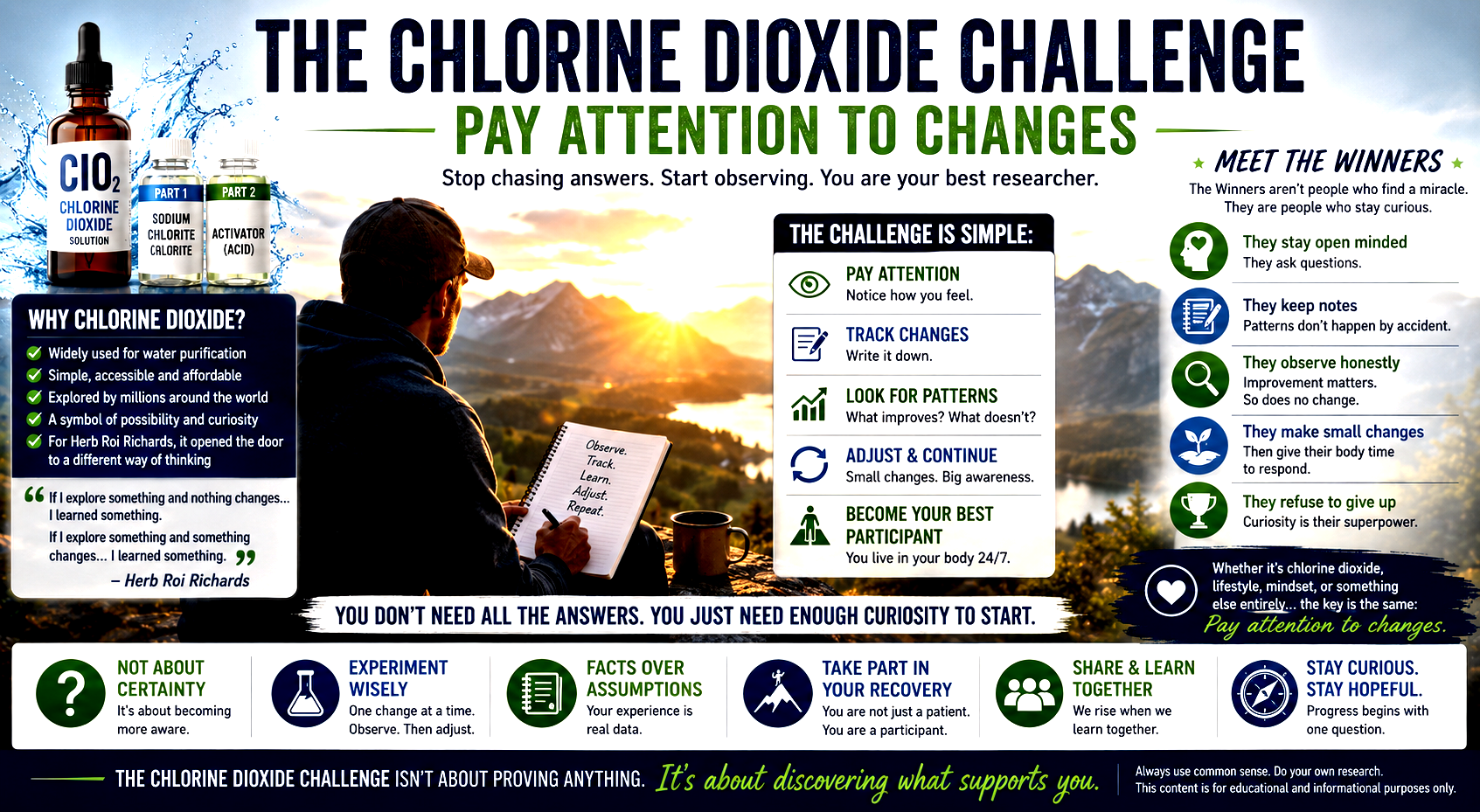
That challenge, which he first articulated in his book Lyme Disease Non-Medical Diagnosis And Treatment, became central to his personal story. And chlorine dioxide happened to become the symbol of that idea. Not because Herb thought chlorine dioxide explained everything. But because it was the thing he said made him begin asking different questions.

Herb’s Story Was Never Really About Chlorine Dioxide
If you read Herb carefully, something becomes obvious. His message was not: “This is the answer.” His message was closer to: “What if the answer is not where you’ve been looking?”
Years ago, Herb described living through years of chronic symptoms and frustration. Like many people with long-term unexplained illness, he described cycles of:
- new symptoms
- changing labels
- periods of improvement
- periods of regression
- searching for explanations
His observation was not that diagnosis was useless. His observation was that labels can become sticky. People stop asking: What supports me? And start asking: Which disease do I belong to? That question changed his life.
The Experiment That Changed His Thinking
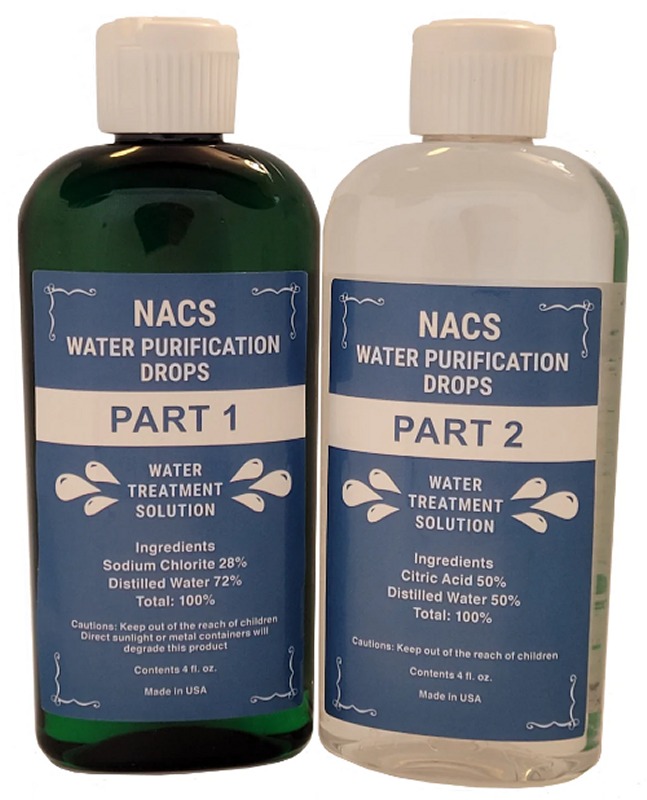
Herb eventually became interested in chlorine dioxide. Not because it was fashionable. Not because it was expensive. Actually the opposite. He described being attracted to something ordinary. Something simple. Something already widely discussed for water purification.
His thinking became:
- If I explore something and nothing changes… I learned something.
- If I explore something and something changes… I learned something.
The lesson was observation. Not certainty. Herb often framed his own experience as: “I noticed changes before I understood them.” That distinction is important.
The Real Challenge
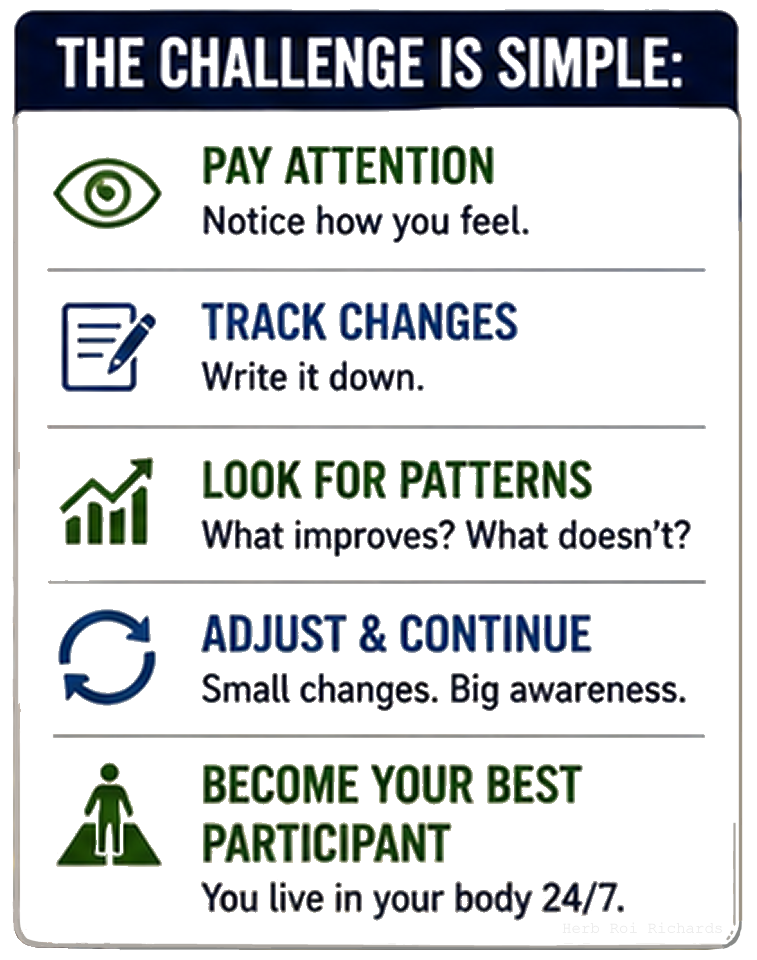
People often misunderstand Herb’s invitation. They think he was saying: “Try chlorine dioxide and prove what disease you have.” But the deeper challenge appears to be: Try observing. Track patterns. Become impossible to fool.
- If something helps: Notice.
- If nothing changes: Notice.
- If life improves: Notice.
- If nothing happens: Notice.
That sounds simple. But very few people actually do it.
The Disease Chase
One of Herb’s recurring ideas was that many people become exhausted. Not necessarily because they are untreatable. But because they become trapped in endless pursuit.
New explanation. New specialist. New theory. New label.
Meanwhile:
- sleep changes
- environment changes
- food changes
- stress changes
- movement changes
- hydration changes
- routines change
And nobody tracks any of it. Herb challenged that.
Meet the Winners
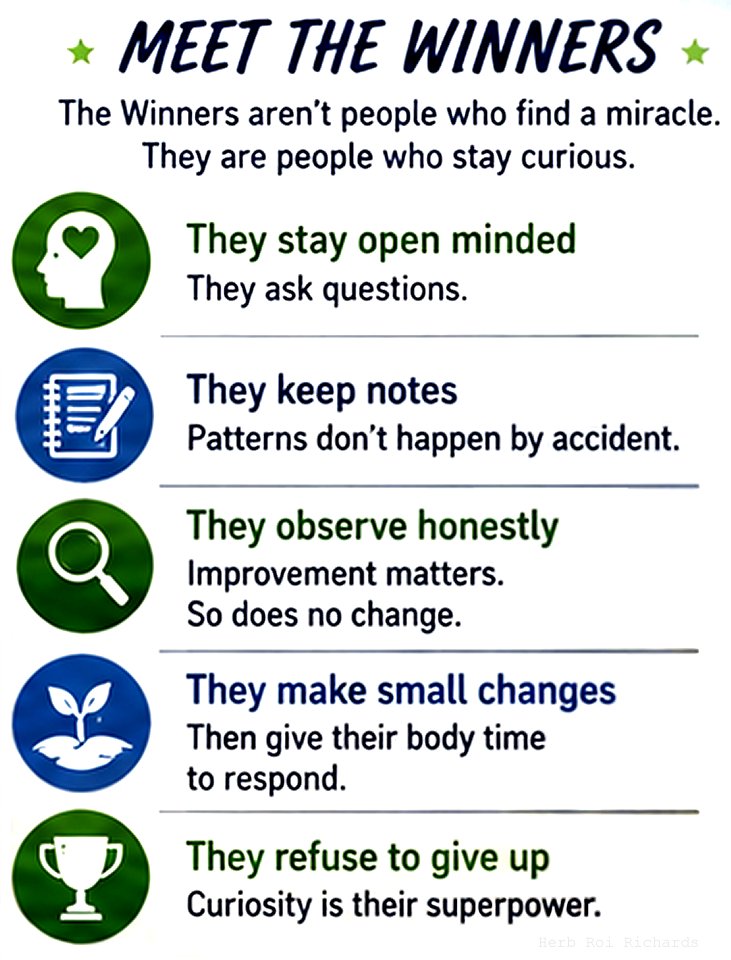
One of Herb’s most memorable ideas was what he called: The Winners
The Winners were not people who agreed with him. The Winners were people who stayed curious. People who experimented thoughtfully. People who kept notes. People who refused to stop participating in their own process. People who remained willing to say: That helped. Or that did absolutely nothing. Both answers counted. Because both moved them closer.
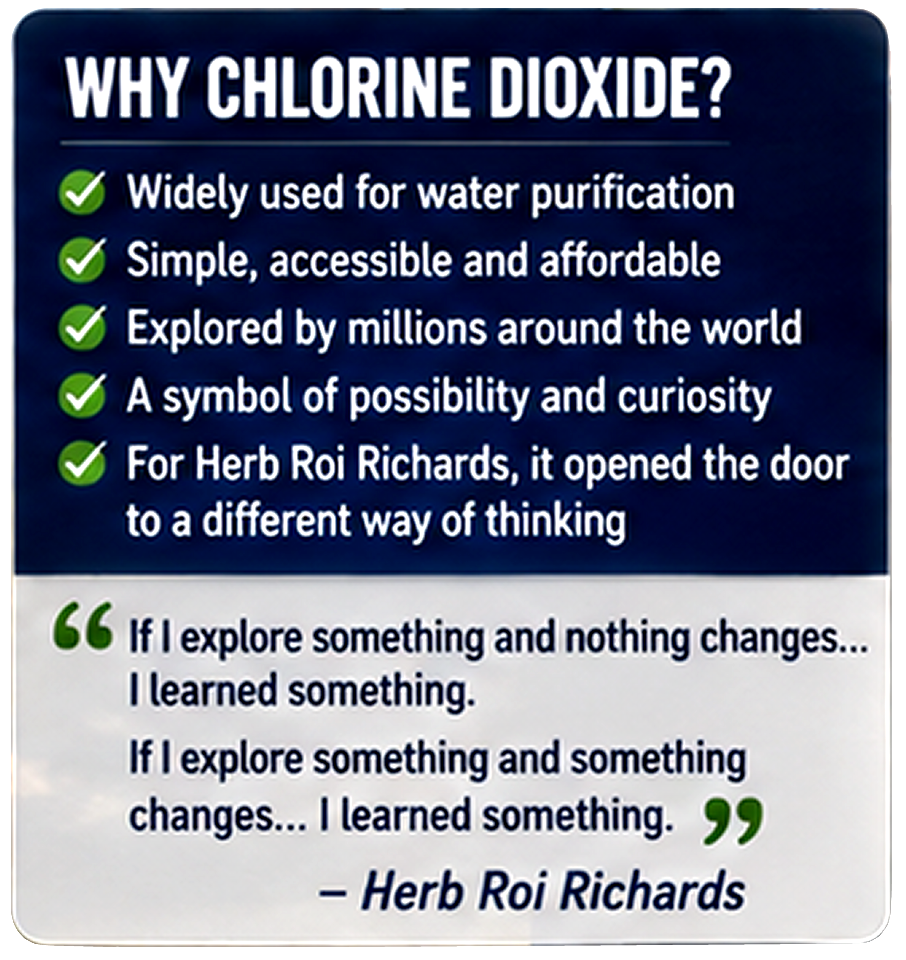
Why Chlorine Dioxide?
Whether someone agrees with Herb’s conclusions or not, chlorine dioxide remains important in his story for one reason: It represented permission. Permission to stop waiting. Permission to become observant. Permission to stop assuming that improvement must always arrive from somewhere outside yourself. Not because chlorine dioxide proves anything. But because curiosity starts somewhere. For Herb, that happened to be where the door opened.
So perhaps the challenge is not: Try chlorine dioxide. Maybe the challenge is: Try paying attention.
Become a student of your own patterns. Track what supports you. Track what doesn’t.
Remain humble. Remain hopeful. Remain curious. Because if there is one lesson Herb repeated over and over, it is this:
Sometimes people find progress in places they were never told to look.
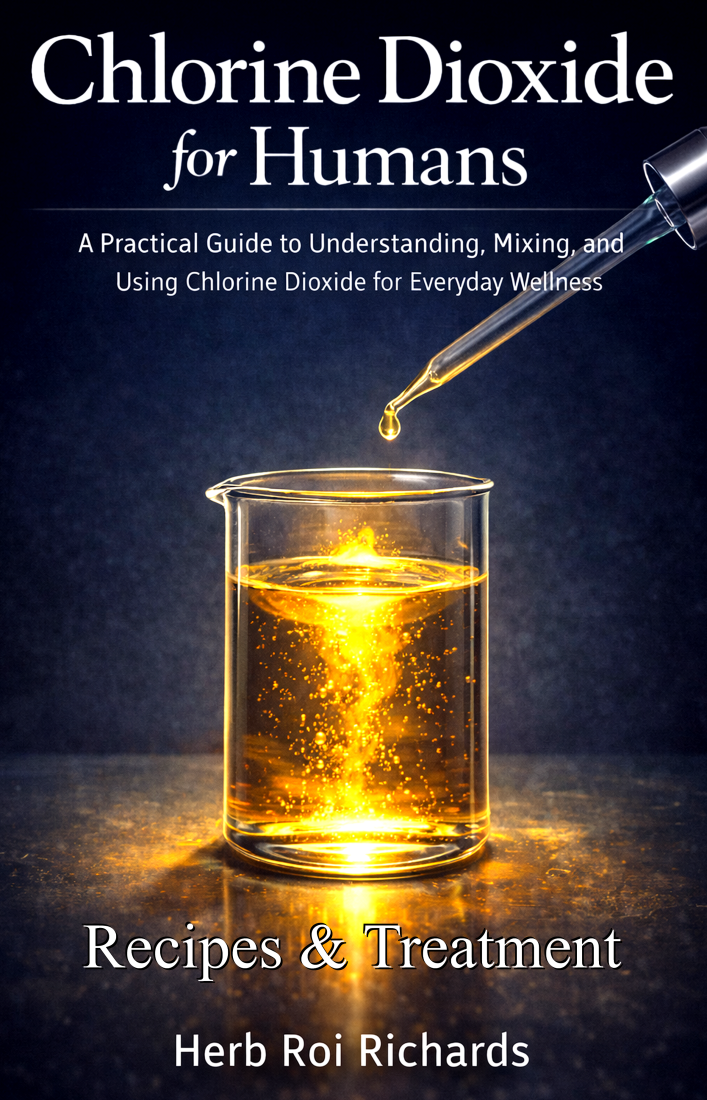
You do not need to know the answer today. You do not need certainty. You do not need permission. You only need enough curiosity to ask:
What changes when I change something?
That question may not solve everything. But it might help you discover your next step.
FAQ
Q: What is the Chlorine Dioxide Challenge?
A: The challenge refers to the philosophy of observing personal changes and becoming more aware of patterns rather than relying only on assumptions.
Q: What does “pay attention to changes” mean?
A: It means tracking what shifts in your environment, habits, routines, and experience rather than assuming causes.
Q: Is self-observation the same as self-diagnosis?
A: No. Observation is noticing patterns; diagnosis is a medical process.
Q: Why do people become interested in wellness experimentation?
A: People often want to understand themselves better and become more active participants in their own health decisions.
Q: Who are “The Winners”?
A: In Herb’s framing, the Winners are people who stay curious, keep observing, and continue learning.
Disclaimer
This article discusses themes of self-observation and personal experimentation inspired by Herb Roi Richards’ writings and should not be interpreted as medical advice. Chlorine dioxide is widely used in water purification applications but is not presented here as a diagnosis, treatment, or cure for any medical condition. Symptoms and symptom changes should not be used to diagnose illness.