Blood and lymphatic disorders include a wide range of conditions that affect the body’s blood cells, bone marrow, lymph nodes, spleen, and immune system. Among the most serious are cancers such as leukemia and non-Hodgkin lymphoma, which can profoundly affect health, quality of life, and survival. Because these illnesses often require prolonged treatment and can be life-changing, some patients explore complementary and alternative approaches alongside conventional medical care. Chlorine dioxide has become one of the substances discussed in some alternative health communities, particularly through personal testimonials shared online.
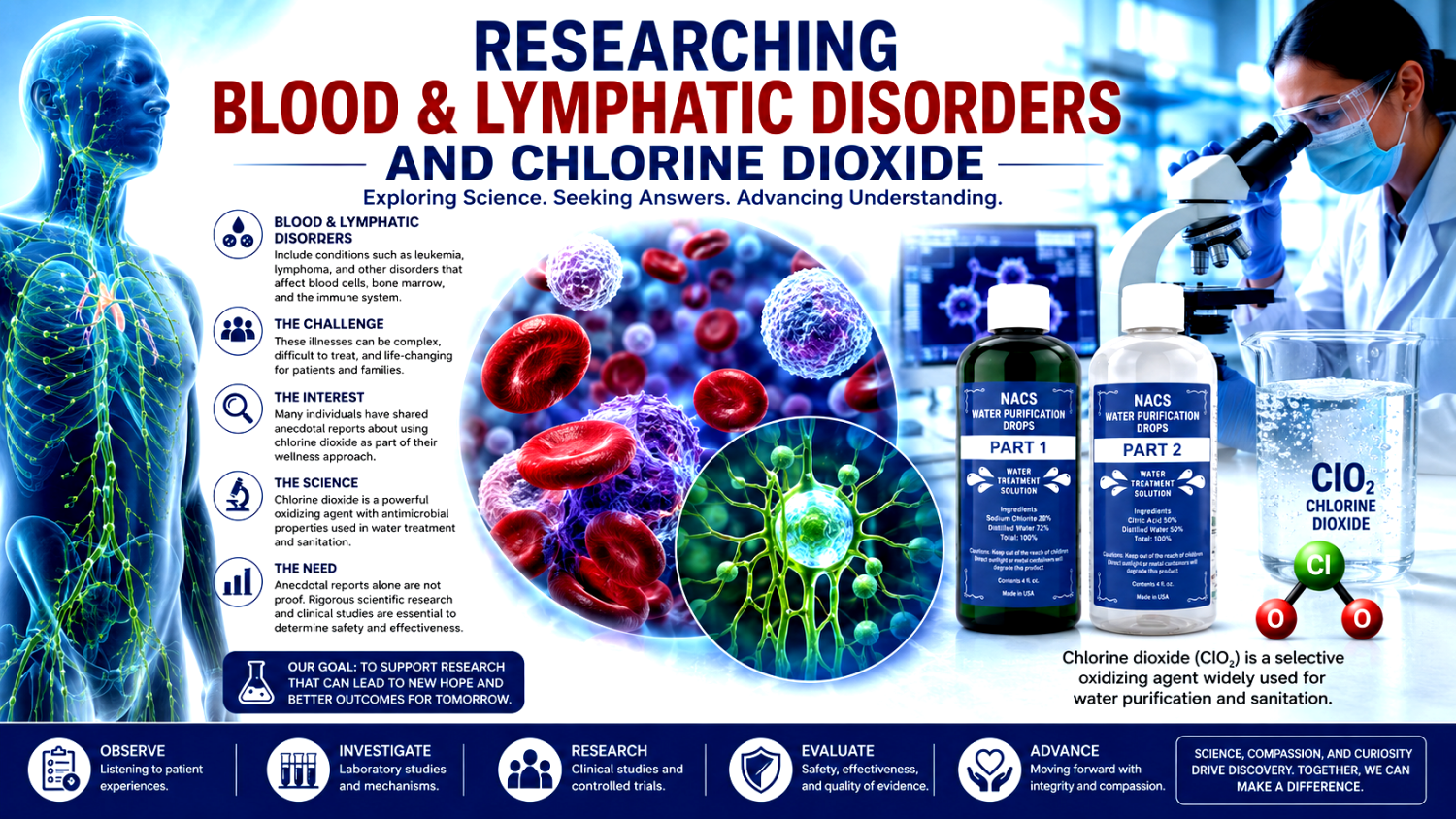
While these anecdotal reports have generated interest, they do not establish that chlorine dioxide is an effective treatment for blood cancers or other blood and lymphatic disorders. To date, there is no high-quality clinical evidence demonstrating that chlorine dioxide safely or effectively treats leukemia, non-Hodgkin lymphoma, or related diseases.
What Are Blood & Lymphatic Disorders?
The blood and lymphatic systems work together to transport oxygen and nutrients, fight infection, remove waste products, and regulate immune function.
Disorders affecting these systems include:
- Leukemia
- Non-Hodgkin lymphoma
- Hodgkin lymphoma
- Multiple myeloma
- Bone marrow disorders
- Anemias
- Clotting disorders
- Certain immune system diseases
Many of these conditions are complex and require specialized diagnosis and treatment by hematologists and oncologists.
Leukemia
Leukemia is a group of cancers that begin in the bone marrow, where blood cells are produced. Abnormal white blood cells multiply uncontrollably, interfering with the body’s ability to produce healthy blood cells.
Symptoms may include:
- Persistent fatigue
- Frequent infections
- Easy bruising or bleeding
- Fever
- Night sweats
- Weight loss
- Enlarged lymph nodes
Treatment often includes combinations of chemotherapy, targeted therapies, immunotherapy, radiation therapy, stem cell transplantation, and supportive care.
Non-Hodgkin Lymphoma
Non-Hodgkin lymphoma is a cancer of the lymphatic system involving abnormal growth of lymphocytes, a type of white blood cell.
Symptoms may include:
- Enlarged lymph nodes
- Fatigue
- Fever
- Night sweats
- Unexplained weight loss
- Persistent infections
Treatment varies depending on the specific subtype and may include chemotherapy, immunotherapy, targeted therapy, radiation, or stem cell transplantation.
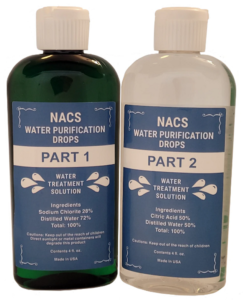
Why People Discuss Chlorine Dioxide?
People who discuss chlorine dioxide in relation to serious illnesses often describe personal experiences or testimonials that they believe reflect improvements in their health.
These reports may arise for many reasons, including:
- Individual differences in disease course
- Simultaneous conventional treatment
- Supportive lifestyle changes
- Differences in diagnosis
- Natural variation in symptoms
- Personal interpretation of improvement
Although such accounts can generate hypotheses, they cannot determine whether chlorine dioxide caused the reported outcomes.
What Properties of Chlorine Dioxide Are Often Discussed?
Chlorine dioxide is best known for its established uses as a selective oxidizing agent in:
- Drinking water treatment
- Municipal water disinfection
- Food sanitation
- Industrial sanitation
- Biofilm management
Because of these antimicrobial and oxidizing properties, some people have speculated that chlorine dioxide could have broader biological effects. However, these hypotheses have not been demonstrated to translate into safe or effective treatment for blood cancers or lymphatic disorders.
Laboratory observations about chemical properties are not the same as evidence that a substance benefits patients with complex diseases.
Why Further Research Matters
History shows that patient observations have sometimes inspired scientific investigation. When large numbers of people report similar experiences, those reports may help researchers identify questions worth studying.
However, anecdotal reports alone cannot establish:
- Safety
- Effectiveness
- Appropriate dosing
- Which patients might benefit
- Whether reported improvements were caused by the intervention
Answering those questions requires carefully designed laboratory research followed by well-conducted clinical trials that compare outcomes objectively.

Leukemia and non-Hodgkin lymphoma remain serious diseases that require prompt medical evaluation and evidence-based treatment.
Although chlorine dioxide continues to be discussed in some wellness communities, there is currently no reliable clinical evidence demonstrating that it is an effective treatment for these disorders.
Continued scientific research into new therapies—including ideas generated from patient observations—plays an important role in advancing medicine. Any promising hypothesis should be evaluated through rigorous, ethical research designed to determine both safety and effectiveness before conclusions are drawn.
References
Blood & Lymphatic Disorders
National Cancer Institute (NCI).
Adult Acute Lymphoblastic Leukemia Treatment (PDQ®).
https://www.cancer.gov/types/leukemia
National Cancer Institute (NCI).
Adult Acute Myeloid Leukemia Treatment (PDQ®).
https://www.cancer.gov/types/leukemia
National Cancer Institute (NCI).
Chronic Lymphocytic Leukemia Treatment (PDQ®).
https://www.cancer.gov/types/leukemia
National Cancer Institute (NCI).
Non-Hodgkin Lymphoma Treatment (PDQ®).
https://www.cancer.gov/types/lymphoma
Blood Cancer Education
Leukemia & Lymphoma Society (LLS).
Educational resources on leukemia, lymphoma, myeloma, treatment options, and patient support.
https://www.lls.org
American Society of Hematology (ASH).
Patient education materials and clinical resources related to blood diseases and hematologic cancers.
https://www.hematology.org
Cancer Research
National Institutes of Health (NIH).
National research programs supporting cancer biology, immunology, and translational medicine.
https://www.nih.gov
National Center for Biotechnology Information (NCBI).
Biomedical literature, molecular biology databases, and scientific publications.
https://www.ncbi.nlm.nih.gov
PubMed.
Searchable database of peer-reviewed biomedical research.
https://pubmed.ncbi.nlm.nih.gov
Drinking Water & Chlorine Dioxide
U.S. Environmental Protection Agency (EPA).
Alternative Disinfectants and Oxidants Guidance Manual.
EPA 815-R-99-014.
U.S. Environmental Protection Agency (EPA).
National Primary Drinking Water Regulations and technical information on chlorine dioxide.
World Health Organization (WHO).
Guidelines for Drinking-water Quality.
Chemical Fact Sheets: Chlorine Dioxide and Chlorite.
Food Safety & Sanitation
U.S. Food and Drug Administration (FDA).
Food Code.
U.S. Department of Agriculture (USDA).
Food Safety and Inspection Service (FSIS) educational resources.
Scientific Background
American Water Works Association (AWWA).
Technical publications concerning chlorine dioxide in municipal drinking water treatment.
Water Research Foundation (WRF).
Research related to drinking water treatment technologies and microbial control.
Evidence-Based Medicine
Cochrane Library.
Systematic reviews evaluating healthcare interventions using rigorous evidence-based methods.
https://www.cochranelibrary.com
National Library of Medicine.
Resources on clinical research methodology, evidence evaluation, and biomedical literature.
https://www.nlm.nih.gov
Reader Note
This article is intended for educational purposes. Chlorine dioxide has established applications in water treatment, sanitation, and certain industrial processes. At present, there is no high-quality clinical evidence demonstrating that chlorine dioxide is a safe or effective treatment for leukemia, non-Hodgkin lymphoma, or other blood and lymphatic disorders. Readers should distinguish between personal testimonials, laboratory findings, and conclusions supported by well-designed human clinical studies.