For generations, Alcohol Use Disorder (AUD) has largely been viewed through two lenses. The first is the moral lens. The second is the psychological lens. In the moral model, a person drinks because they lack discipline, character, or self-control. In the psychological model, alcohol becomes a coping mechanism for trauma, stress, anxiety, depression, loneliness, or unresolved emotional pain.

While both perspectives may contain elements of truth, a growing number of researchers, practitioners, and independent investigators have begun exploring a third possibility: What if some forms of alcohol dependency have a biological component that extends beyond psychology alone?
That question has led some people into the emerging fields of microbiome research, parasitology, neuroinflammation, and microbial influence on behavior. And surprisingly, this is where chlorine dioxide enters the conversation.
Biological Hijacking
One of the more interesting ideas circulating among certain researchers is that some organisms may influence behavior in ways that increase their own survival. This sounds strange at first. Yet nature is full of examples. Numerous parasites are known to alter the behavior of insects, rodents, fish, and other animals in ways that benefit the parasite’s life cycle.
The question scientific researchers ask is:
Could certain organisms subtly influence human behavior as well?
Not necessarily through direct control, but through effects on:
- dopamine pathways
- serotonin regulation
- reward sensitivity
- inflammation
- anxiety levels
- craving patterns
- stress responses
Some addictions may be amplified by biological factors operating beneath conscious awareness.
Toxoplasma gondii
One organism frequently discussed in these conversations is Toxoplasma gondii. T. gondii is a common protozoan parasite found throughout the world. While best known for its association with cats, exposure can also occur through contaminated water, undercooked meat, soil, and other environmental sources.
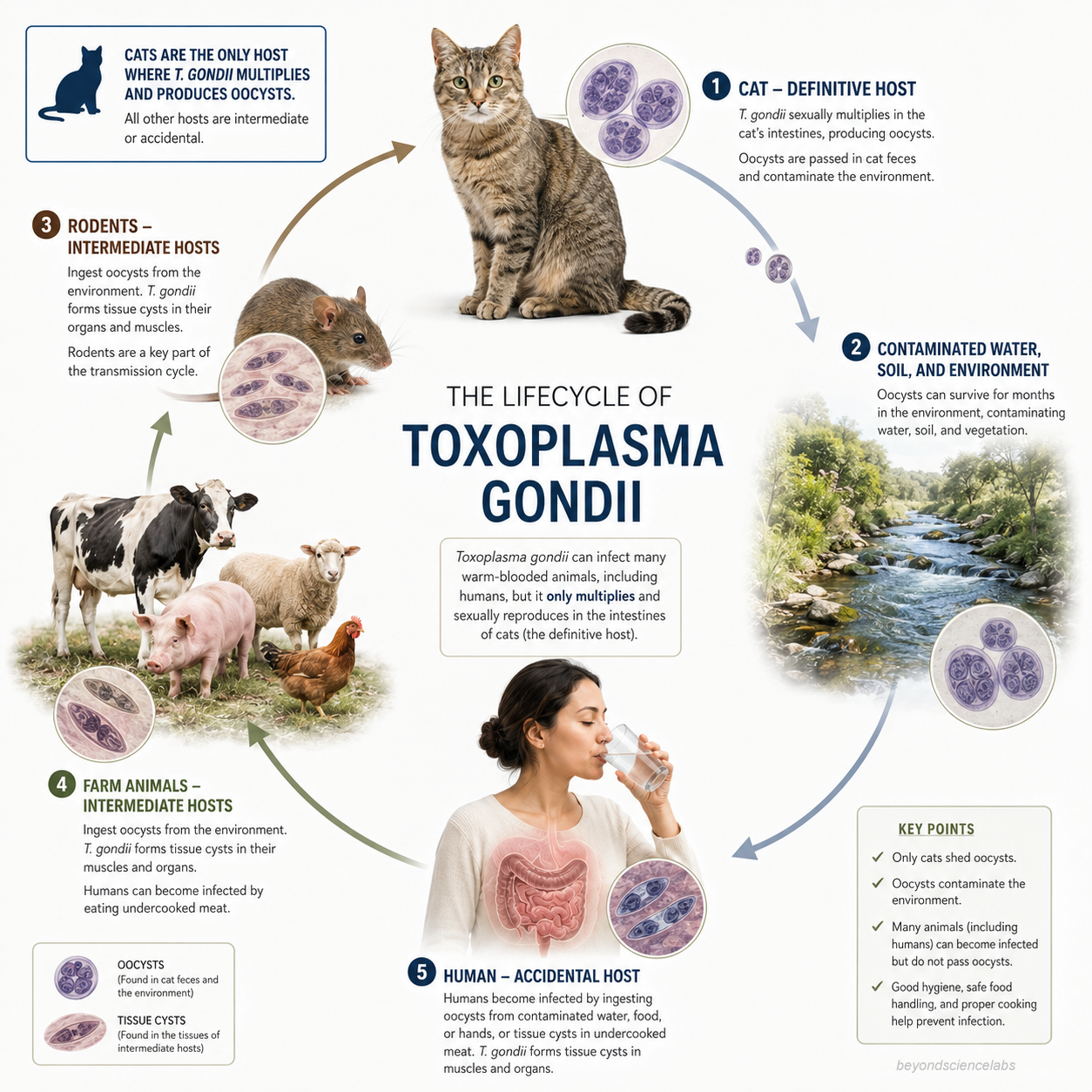
Researchers have investigated whether chronic T. gondii exposure may influence:
- impulsivity
- risk-taking behavior
- reward seeking
- reaction time
- anxiety
- mood regulation
The research suggests that parasites could influence reward circuitry, a finding that has captured considerable attention among those studying addiction.
Beyond Parasites
Interestingly, not everyone in this camp believes parasites are the entire story.
Some point instead toward:
- fungal overgrowth
- chronic mold exposure
- gut dysbiosis
- bacterial imbalance
- inflammatory burden
The theory here is that certain microbes may influence cravings indirectly.
Some researchers have suggested that microbial populations may:
- affect neurotransmitter production
- alter gut-brain communication
- increase cravings for sugar
- increase cravings for alcohol
- contribute to anxiety or depression
If true, alcohol consumption may sometimes be serving a biological demand rather than a purely psychological one.
Neuroinflammation and Self-Medication
Another idea frequently discussed involves neuroinflammation.
When chronic inflammation affects the nervous system, people may experience:
- anxiety
- depression
- irritability
- brain fog
- sleep disturbances
- emotional instability
Alcohol temporarily changes neurochemistry in ways that many people find calming.
Some investigators believe individuals may unknowingly use alcohol as a form of self-medication against chronic inflammatory discomfort.
In this framework, the alcohol is not the root problem. It is a symptom of a deeper imbalance.
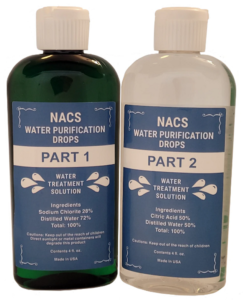
Why Chlorine Dioxide Became Part of the Discussion
This is where chlorine dioxide enters the picture.
For decades, chlorine dioxide has been widely used in water purification and sanitation because of its ability to reduce a broad range of microorganisms.
Over time, individuals began experimenting with chlorine dioxide as part of broader wellness and microbial-reduction protocols, as chlorine dioxide is considered to excel in parasite destruction (e.g., Toxoplasma gondii), mold and fungal elimination, and microbiome recovery.
Among alternative-health communities, reports emerged from individuals who claimed reductions in:
- alcohol cravings
- compulsive drinking behaviors
- binge patterns
- obsessive thoughts about alcohol
The reports became common enough that entire communities formed around the discussion. What makes these reports particularly interesting is that many people describe similar experiences. Rather than feeling forced to stop drinking, they often describe the desire to drink gradually fading. Some compare it to turning down the volume on a constant internal signal.
The Most Commonly Reported Approach
Among those exploring this concept, one of the most frequently discussed methods involves very small amounts of activated chlorine dioxide taken throughout the day.
Users often describe:
- small diluted servings
- repeated at regular intervals
- combined with hydration
- nutritional support
- mineral replenishment
- gut restoration efforts
The reasoning is that maintaining consistent exposure may gradually reduce the microbial burden some believe contributes to addictive behavior.
Importantly, there is no universally accepted protocol, and approaches vary considerably from one individual to another.
Even within communities that support these ideas, there is broad agreement on one point: Alcohol Use Disorder is complex. Different individuals may be drinking for very different reasons.
Some may be primarily responding to:
- trauma
- grief
- loneliness
- emotional pain
Others may be dealing with:
- neuroinflammation
- microbial imbalance
- chronic infection
- gut dysfunction
And many may have a combination of both.
This may explain why some individuals report dramatic improvements.
A New Way of Looking at Addiction
Perhaps the most valuable contribution of these discussions is not chlorine dioxide itself. Perhaps it is the idea that addiction may sometimes involve more than willpower.
The emerging picture suggests that behavior may be influenced by a complex interaction between:
- psychology
- biology
- environment
- inflammation
- nutrition
- microbial ecology
- and personal history
That possibility encourages a more compassionate view of those struggling with addiction.
Instead of asking:
“Why can’t they just stop?”
We may begin asking:
“What underlying forces are making it difficult for them to stop?”
The connection between Alcohol Use Disorder, microbial burden, parasites, neuroinflammation, and chlorine dioxide remains an area of ongoing discussion and investigation. Some of the theories are supported by emerging research. Others remain speculative. Many are based largely on user reports and personal experiences. Nevertheless, the number of individuals exploring these ideas continues to grow.
Whether future research confirms or disproves these observations, the conversation raises important questions about how deeply biology may influence behavior and whether some forms of addiction are more complex than we have traditionally believed.
The most responsible path forward is continued research, careful observation, and a willingness to explore new ideas while maintaining critical thinking and intellectual honesty.
Disclaimer
This article is provided for educational and informational purposes only. Alcohol Use Disorder is a serious condition that may require professional medical, psychological, or addiction-related support. References to chlorine dioxide, microbial burden, parasites, fungi, or gut-related theories represent a mixture of emerging research, hypotheses, and anecdotal reports. Chlorine dioxide is widely used in water purification and sanitation applications but is not approved by regulatory agencies for the treatment of Alcohol Use Disorder or addiction. Readers should conduct independent research and consult qualified healthcare professionals regarding medical decisions.