The lymphatic system is the drainage and purification network of the human body. It clears cellular waste, toxins, pathogens, excess proteins, and metabolic debris. Unfortunately, it has no pump of its own; it relies entirely on movement, hydration, and internal flow to function.
When lymph becomes stagnant, people experience:
- swelling
- fatigue
- skin problems
- inflammation
- brain fog
- hormonal disruption
- immune weakness
- accelerated aging
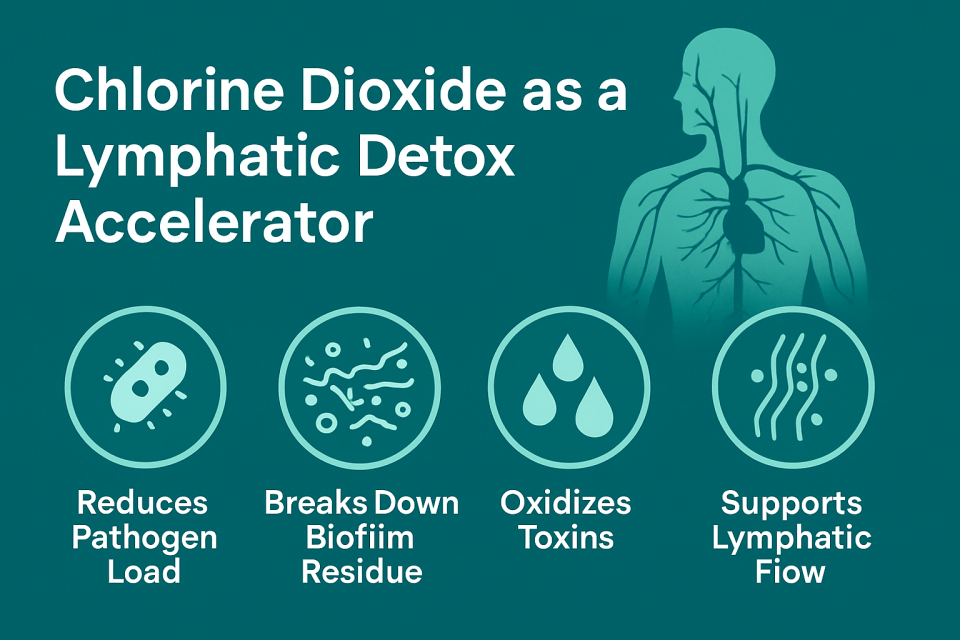
Emerging wellness research and alternative practitioners are exploring chlorine dioxide’s (CD/CDS) potential role as a lymphatic detox accelerator, not because CD “cleans lymph” directly, but because it may help reduce microbial load, break down biofilms, and oxidize waste that congests lymphatic pathways.
- What Is Lymphatic Stagnation?
Lymphatic stagnation occurs when lymph fluid becomes:
-
- thick or sluggish
- overburdened with waste
- congested in nodes or vessels
- polluted with microbial debris
- unable to drain tissues properly
This leads to tissue toxicity and chronic inflammation.
Signs of stagnation include:
-
- puffiness
- swelling in hands/feet
- cellulite
- chronic sinus congestion
- fatigue
- foggy thinking
- skin breakouts
- tight neck and shoulders
- recurring infections
Over time, lymph stagnation accelerates aging by trapping inflammatory waste around organs and tissues.
- WHY Does Lymph Get Congested?
-
- Biofilms
- Biofilms trap toxins, fats, and microbial waste that must be filtered through the lymph.
- Microbial Overgrowth
- Bacteria, fungi, yeasts, and parasites continuously shed debris that clogs lymph.
- Poor Hydration
- Lymph thickens in a dehydrated environment.
- Sedentary Lifestyle
- Without movement, lymph struggles to circulate.
- Environmental Toxins
- Pesticides, plastics, and heavy metals overload lymph filtration.
- Cellular Waste Accumulation
- Aging cells produce more metabolic debris.
- Past infections
- Residual viral or bacterial fragments slow lymph movement for years.
- Biofilms
The combined effect is a lymph system clogged with microscopic “sludge.”
- WHO May Benefit From Lymphatic Support Using CD?
People who experience:
-
- chronic fatigue
- swollen lymph nodes
- recurring infections
- inability to detox normally
- persistent skin issues
- cellulite or puffiness
- sinus pressure
- autoimmune flare-ups
- chemical sensitivity
- post-infection inflammation
- brain fog
These are all signs of lymphatic overload.
- WHERE Does Chlorine Dioxide Act?
Chlorine dioxide does not directly target lymph, but it can support the lymphatic system by:
-
- Reducing Pathogen Load
- Fewer microbes = less microbial debris entering lymph.
- Breaking Down Biofilm Density
- Biofilm fragments and microbial toxins are major lymphic burdens.
CD weakens biofilm structure, lowering the amount of debris.
- Biofilm fragments and microbial toxins are major lymphic burdens.
- Oxidizing Metabolic Waste
- CD breaks down organic compounds, which may reduce lymph congestion.
- Reducing Inflammation
- Inflammation thickens lymph fluid.
Lower inflammation = better flow.
- Inflammation thickens lymph fluid.
- Improving Cellular Cleanliness
- Cleaner extracellular fluid means lymph has fewer toxins to transport.
- Supporting Oxygenation
- Better oxygenation improves lymphatic pumping at the micro-level.
- Reducing Pathogen Load
In other words: CD helps clean the water before it enters the drain.
- WHEN Is CD Most Useful for the Lymphatic System?
CD becomes relevant when people experience:
-
- chronic inflammatory conditions
- slow detox
- feeling “clogged” or heavy
- swelling or puffiness
- sluggish digestion
- frequent brain fog
- persistent sinus issues
- slow recovery from illness
- aging-related stagnation
The lymphatic system tends to stagnate quietly for years before symptoms become obvious, making proactive support beneficial.
HOW Chlorine Dioxide May Support Lymphatic Detox (Mechanistic Overview)
-
- CD Reduces Microbial Load
- Less microbial waste means less lymphic congestion.
- CD Breaks Down Biofilm Residue
- Biofilms block drainage and trap toxins in tissues.
- CD Oxidizes Toxins into Simpler Compounds
- This reduces lymphic burden and makes toxins more transportable.
- CD Helps Clear the Extracellular Matrix
- The “space between cells” becomes cleaner, improving lymph flow.
- CD Reduces Tissue Acidity
- Lymph moves better in alkaline or neutral environments.
- CD Reduces Inflammatory Bulk
- Inflamed tissues leak proteins into lymph. Reducing inflammation lowers the volume entering lymph vessels.
- CD Supports Energy and Oxygen
- Improved oxygenation supports deeper lymphatic pumping.
- CD Reduces Microbial Load

Quick How-To Guide
Below is the general framework wellness researchers use:
-
- Low-and-Slow Oral Microdosing
People often microdose diluted CDS throughout the day to avoid overwhelming lymph release.
-
- Hydration Is Critical
Lymph is 95% water.
CD can release debris quickly — hydration prevents thickening.
-
- Movement Supports Detox
Helpful techniques include:
-
-
- rebounding
- brisk walking
- stretching
- bouncing on feet
- deep diaphragmatic breathing
-
-
- Combine With Magnesium and Minerals
Minerals are essential for fluid movement and detoxification.
-
- Support Liver Function
Lymph dumps into the bloodstream, and the liver must filter it.
-
- Start With Short Durations
Many people notice improvements in:
-
-
- facial puffiness
- neck tightness
- sinus drainage
- skin clarity
- energy levels
-
within a few days to weeks.
Disclaimer
This article is for informational and research purposes only. It does not diagnose, treat, cure, or prevent disease. Chlorine dioxide is not approved for internal use by regulatory authorities. Always consult qualified professionals before making health-related decisions.