The nerve system is the master regulator of the body. It governs movement, digestion, immunity, hormone release, emotional state, sleep, and recovery. When the nerve system is balanced, the body heals efficiently. When it is overstimulated or dysregulated, nearly every system suffers. Many modern health challenges are not caused by structural damage to nerves, but by persistent signal overload. Chronic inflammation, microbial toxins, biofilms, oxidative waste, poor oxygenation, and metabolic stress continuously irritate nerve tissue and sensory pathways. Over time, this keeps the nerve system locked in a heightened stress response.
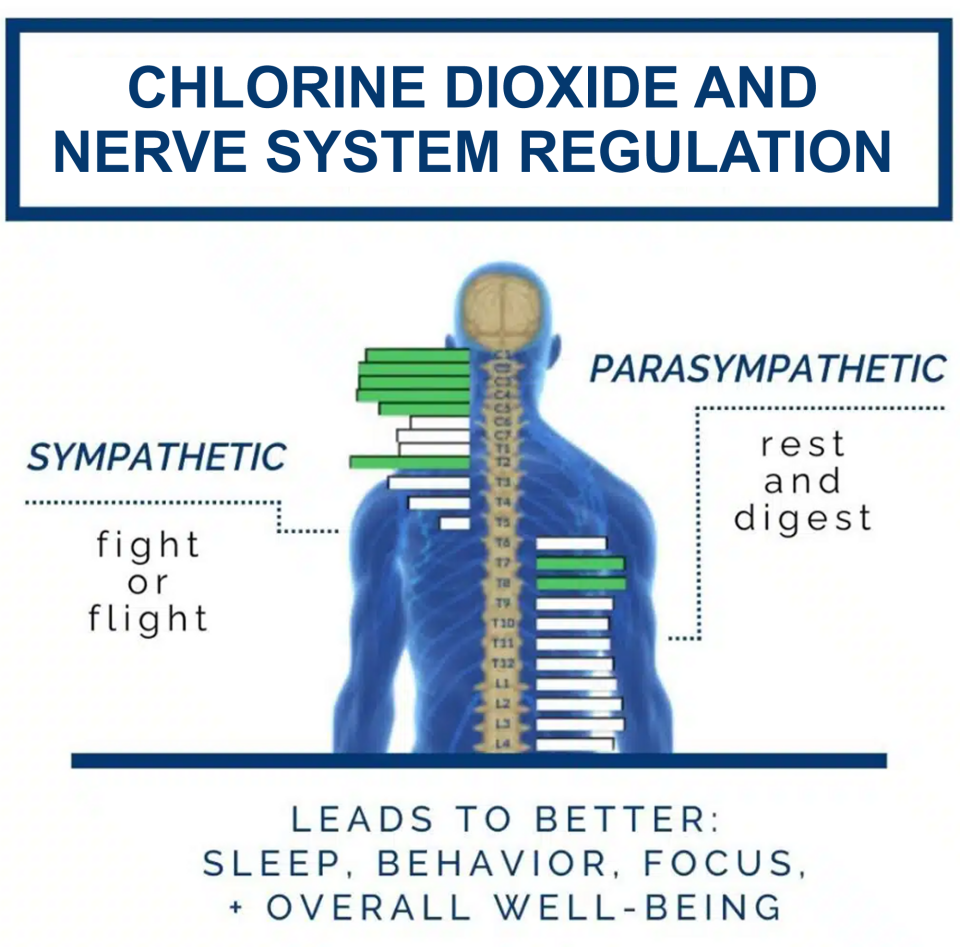
Chlorine dioxide (CD/CDS) is being explored in alternative health research as a supportive upstream tool for nerve system regulation, not because it acts as a sedative or stimulant, but because it may help remove the chronic irritants that prevent the nerve system from returning to baseline.
Reducing internal signal noise allows the nerve system to reset, regulate, and recover.
- What Is Nerve System Dysregulation?
Nerve system dysregulation occurs when the balance between the sympathetic (fight-or-flight) and parasympathetic (rest-and-repair) branches is lost.
Common signs include:
-
- anxiety or hypervigilance
- irritability
- poor sleep
- brain fog
- sensory sensitivity
- digestive issues
- muscle tension
- fatigue with wired feelings
- heart palpitations
- temperature sensitivity
- poor stress tolerance
In many cases, the nerve system is not damaged, but overstimulated.
- Why Does the Nerve System Become Overloaded?
The nerve system reacts to threat signals, not just emotional stress.
Major contributors include:
-
- Chronic Inflammation
Inflammatory cytokines irritate nerve endings and central signaling pathways.
-
- Microbial Toxins
Pathogen byproducts can directly affect neurotransmission.
-
- Biofilms
Biofilms trap neuroactive toxins that continuously stimulate sensory nerves.
-
- Oxidative Stress
Reactive waste damages nerve membranes and signaling fidelity.
-
- Poor Oxygen Delivery
Neurons are highly oxygen-dependent; low oxygen increases excitability.
-
- Gut-Brain Axis Disruption
Endotoxins and microbial metabolites overstimulate the vagus nerve.
-
- Lymphatic Congestion
Waste buildup near nerves prolongs irritation.
Together, these create a constant background alarm that the nerve system cannot ignore.
- Who May Benefit From Nerve System Regulation Support?
Individuals experiencing:
-
- chronic anxiety or tension
- post-viral nerve symptoms
- sleep disturbances
- hypersensitivity to noise, light, or touch
- unexplained fatigue
- digestive-stress patterns
- chronic pain without injury
- emotional volatility
- burnout or adrenal-like symptoms
- aging-related nerve decline
These symptoms often persist even when psychological stress is reduced, indicating physical signal overload.
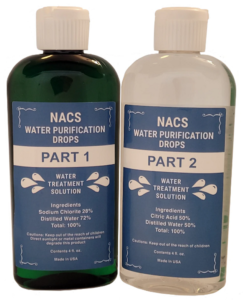
- Where Does Chlorine Dioxide Fit In?
Chlorine dioxide does not act as a nerve drug and does not suppress neural activity.
Its proposed role is irritant reduction:
-
- Lowering Neurotoxic Microbial Load
Fewer microbial byproducts = fewer nerve irritants.
-
- Weakening Biofilms
Removes toxin reservoirs near neural pathways.
-
- Reducing Inflammatory Waste
Calmer tissues transmit fewer danger signals.
-
- Improving Oxygenation
Supports stable nerve signaling and energy balance.
-
- Supporting Gut and Barrier Health
Reduces overstimulation of gut-brain communication.
-
- Improving Lymphatic Clearance
Allows neuroinflammatory waste to exit tissues.
In essence:
CD helps quiet the background noise that keeps the nerve system on edge.
- When Does Nerve System Reset Become Possible?
Nerve system regulation often improves:
-
- after chronic infections are reduced
- after inflammation declines
- after detox pathways reopen
- after sleep quality improves
- after oxygen delivery normalizes
- after gut irritation resolves
Many people report sudden improvements, better sleep, calmer mood, and clearer thinking once the final irritant is removed.
How Chlorine Dioxide Supports Nerve System Regulation
- Reducing Constant Sensory Irritation
Lower toxin load reduces continuous nerve firing.
- Supporting Parasympathetic Dominance
Calmer tissues allow rest-and-repair signaling to reassert itself.
- Improving Mitochondrial Energy in Neurons
Better energy reduces nerve exhaustion and instability.
- Reducing Neuroinflammation
Calmer immune signaling supports healthier nerve function.
- Improving Oxygen Balance
Stable oxygen levels reduce excitatory stress in neurons.
- Supporting Vagus Nerve Calm
Cleaner gut and tissue environments reduce vagal overstimulation.
- Improving Sleep-Wake Regulation
Calmer nerve signaling supports circadian balance.
Regulation vs Sedation
True nerve system health is not achieved by numbing sensation or forcing relaxation. It is achieved by removing the physical reasons the nerve system stays activated.
When irritants are removed, the nerve system often:
-
- calms naturally
- sleeps more deeply
- processes emotions more smoothly
- recovers faster
- tolerates stress better
- ages more slowly
This represents regulation, not suppression.

Quick How-To Guide
- Focus on Irritant Removal
Nerve regulation follows cleanup, not force.
- Support Drainage
Hydration, minerals, and movement help clear neural irritants.
- Avoid Overstimulation
Excess stimulants can delay nerve reset.
- Support Sleep and Recovery
Deep sleep is critical for nerve repair.
- Observe Nerve Shifts
People often notice:
-
- calmer baseline mood
- improved sleep
- reduced anxiety
- clearer cognition
- improved digestion
- better stress resilience
Disclaimer
This article is for informational and research purposes only. It does not diagnose, treat, cure, or prevent disease. Chlorine dioxide is not approved for internal therapeutic use by regulatory agencies. Nerve system health is complex; consult qualified professionals before making health-related decisions.